

The most important things in brief:
Stomach problems after whey protein? Lactose is a suspect: If you get stomach problems after a protein shake, it could be due to lactose intolerance. The body cannot properly break down milk sugar, which can lead to discomfort. To meet your protein requirements even in such cases, lactose-free whey protein is available.
Is whey protein lactose-free? Whey protein normally contains lactose, but whey protein isolate, which is produced using special filtration processes, is almost lactose-free and thus a good alternative for people with lactose intolerance.
Are there alternatives to whey protein with lactose? Yes, there is lactose-free whey protein, e.g. our Clear Whey Isoclear or our Iso Whey.
Conclusion: You can also meet your protein intake with lactose-free whey protein. You can also effectively build muscle with lactose-free whey protein or plant-based alternatives such as soy protein, as they offer a comparable amino acid profile and make it easier for you to meet your protein requirements.
Whey protein and lactose intolerance
Whey protein – the whey protein from milk – is one of the most popular and effective proteins among athletes. Like all proteins, whey protein also contributes to an increase and maintenance of muscle mass.1
Since whey protein is nothing other than whey and is obtained from milk, it naturally contains lactose. This is why consuming whey is problematic at first glance for people with an intolerance: About 15% of people in Germany cannot tolerate lactose, which manifests itself in stomach and intestinal problems after consuming dairy products.2,3
Stomach problems after a whey protein shake? Lactose is a suspect!
You had a delicious protein shake after training and shortly afterwards your stomach was rumbling? The reason could be a lactose intolerance4:
Some people can break down lactose in the small intestine into the sugars galactose and glucose through the enzyme lactase produced in the body itself. However, people with lactose intolerance can no longer do this or produce only insufficient amounts because they produce little or no lactase.
The milk sugar then reaches the large intestine undigested, where it is fermented by the intestinal bacteria. This process produces gases such as methane, carbon dioxide, and hydrogen, which can lead to bloating, a feeling of fullness, diarrhea, and intestinal cramps.
People who suffer from this intolerance therefore refrain from consuming products containing milk or take lactase in addition to their meals. But what does that mean for the body's supply of protein, since dairy products are generally a good source of protein in the daily diet? Affected individuals can turn to alternative protein sources, e.g. specially produced lactose-free foods, lactose-free whey protein or other products that contain protein. Many athletes rely on protein powder with whey during training to support their muscle building with the amino acids contained therein.1 However, whey or whey protein is a dairy product that contains lactose and is therefore problematic for people with an intolerance – that is why alternative and lactose-free options were developed.
Is whey protein lactose-free?
Whey protein is whey protein, a dairy product, and therefore contains lactose. Is there even a lactose-free whey protein? Yes, because there are certain filtration processes with which the so-called whey protein isolate can be produced. The whey isolate contains little to no lactose and is a good alternative for people with lactose intolerance.
Are there alternatives to whey protein with lactose?
For certain groups of people, pure whey is out of the question, e.g. for people who suffer from a cow's milk allergy. In addition to milk sugar, they also cannot tolerate the animal protein in milk.5
The same applies to athletes who eat purely plant-based: Lactose-free whey protein isolates are also not an option here. Nevertheless, there are also alternatives for them, e.g. vegan protein powders.
Whey without lactose: Whey protein isolate
Whey protein isolate is a protein powder with a very low to no lactose content. It is therefore the ideal alternative for people with lactose intolerance.
The isolate contains between 90 and 96% protein and is obtained through a microfiltration process. This means it contains less lactose, fat, and carbohydrates, is suitable for a low-carbohydrate diet, and makes the consumption of whey protein possible despite lactose intolerance. In addition, isolate has shorter protein chains and is available to the body and muscles within a few minutes.6
You can also find lactose-free whey protein with us:
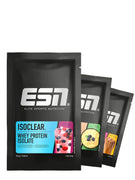
- Clear Whey: Our Isoclear is a patented whey protein isolate. It tastes deliciously fruity and is refreshingly light like a soft drink and is the ideal alternative to creamy protein shakes. But the best thing is that you can also drink it if you are lactose intolerant: Because the lactose content of the isolate is below 0.1 g per 100 ml. Furthermore, our Clear Whey Isoclear contains no sugar and no fat.7
- Whey Isolate: Our Iso Whey is a high-quality whey protein isolate with little lactose and fat, while having a very high protein content. It is rich in all essential amino acids with high biological value and wonderfully creamy – you can enjoy it like a milkshake.


